The society of Kerala reflects a unique social configuration that is vibrant, diverse and tolerant of various cultures. The hateful ‘othering’ finds little space in the state. The occasional communal tensions emerge not because of hatred towards other communities but in regard to one’s own community. Three major religions flourished in this land and the caste system was constantly fought against by its people. It will not be an exaggeration to suggest that India’s ‘Unity in Diversity’ finds its best form in Kerala. But how did such a diverse society emerge? The folktale Parayi Pettu Panthiruklam (the twelve clans born of a low-caste woman) reflects on this very question.
✴︎ ✴︎ ✴︎ ✴︎ ✴︎
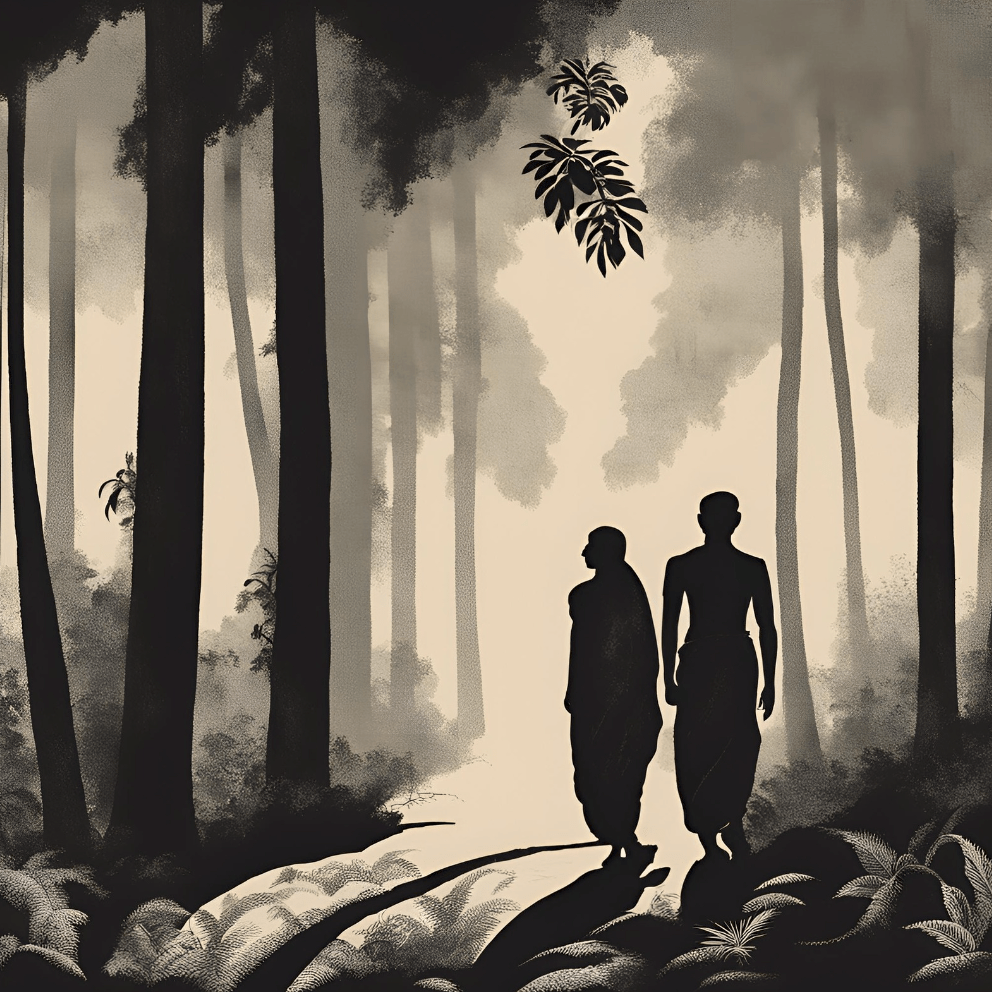
Once upon a time, there lived a Brahmin scholar named Vararuchi. He was the eldest son of Govindaswami, who is believed to have initiated jagadguru Adi Sankaracharya into the world of Vedas. Vararuchi wrote Vaakyam and Paralpperu, both books dealing with astrology. Vararuchi became a close confidante of King Vikramaditya.
During one of his travels, Vararuchi fell in love with a girl’s intelligence and married her. After some days, while the couple were sitting and talking in their garden, Vararuchi noticed a scar on her head. When he asked his wife about the scar she replied that she was adopted by her Brahmin parents. Her foster mother found her on a raft in the river with a burning torch tied to her head. They rescued and nurtured her as their own child.
Vararuchi was shocked because he exactly knew who that woman was.
✴︎ ✴︎ ✴︎ ✴︎ ✴︎
Many years ago, King Vikramaditya asked Vararuchi, “What is the most renowned verse in the great epic Ramayana?”. Despite his literary genius, Vararuchi didn’t have the answer. The King gave him 41 days to find the answer and if he fails, ordered him never to return to the kingdom. Vararuchi is set on his journey to find the answer. Whomever he asked, no one gave a satisfactory answer. Many scholars replied that all the verses are equally important. On the 40th day, panic-stricken and dejected, Vararuchi wandered aimlessly and fell asleep on a platform around a banyan tree. He prayed to forest goddesses to protect him before sleeping. It happened that there were some spirits on the tree and they decided to protect him for that night.
During the night, some other spirits are walking by the tree. They invited the tree spirits to join them as they were all heading to witness the delivery of a baby by a Pariah (low-caste) woman. But tree spirits refused because they took an oath to protect Vararuchi sleeping under the tree and asked them to drop by and give the details of the baby on their way back.
Towards dawn, Vararuchi woke up but kept lying on the platform brooding over his miserable plight. The spirits who went to witness the birth of the baby came back. They gave the details to the tree-spirits. A girl child was born to a Pariah couple. The spirits predicted that she would be married to a boy called Vararuchi, who does not know that the verse Maam Viddhi (My Destiny) is the most renowned verse in Ramaynana. Vararuchi was lying there quietly listening to this conversation. He was overjoyed and also saddened by the fact that he was destined to marry a pariah girl. After the spirits departed, he got up and went to the court of Vikramaditya and recited the renowned verse in Ramayana. The court unanimously approved the verse and the king was also extremely happy.
After the court dispersed, Vararuchi went up to the King and disclosed the news of the birth of a Paraiah girl and said that the spirits foretold the fall of the kingdom with her birth and it was important to get rid of her to save the kingdom. The king trusts the advice of Vararuchi. But because infanticide is a crime in his kingdom, the King ordered that they make a raft with plantain trees, place the baby on it with her head tied with a torch and let it float away in the river. The plan was executed by his soldiers immediately. Vararuchi was relieved and thought to himself that he had changed his destiny and protected himself from a downfall.
✴︎ ✴︎ ✴︎ ✴︎ ✴︎
Vararuchi realised that his wife was the same low-caste Pariah girl he wanted to get rid of. He realised the power of destiny and fate. He told the whole story to his wife and fell in deep remorse for his actions. He decided to spend the rest of his life on a long pilgrimage and his wife decided to accompany him.
After wandering for days, they reached a long stretch of land across the Sahyadri mountains, which is now known as Kerala. During their journey through that land, his wife conceived her first child. When they were in the midst of a jungle, she went into labour. Vararuchi asked her to go into the forest and deliver while he waited on the pathway. She gave birth to a baby. When she announced this to her husband, he asked her if the child has got a mouth and his wife said ‘yes’. Vararuchi told her to leave the baby there and come out to him. According to him, because god gave him the mouth to cry, god will provide him with food and shelter. His wife followed his order leaving the child back and continued the journey with her husband. The same scenario repeated every time she gave birth to a baby. In twelve years, she gave birth to eleven babies, all of them had a mouth, and they were left in the forest to be fed by god.
But when she was about to deliver her twelfth child, she decided to have the baby for herself and not discard in the forest. After she gave birth, Vararuchi asked her if the baby had a mouth. She said, “No” and carried the baby in her bosom. When she walked a few steps ahead, the infant actually became mouthless. Realising the mistake she made, the wife began to cry. Vararuchi understood what happened and took the child to a hilltop and enshrined it there. The place where the mouthless baby was consecrated is the present-day famous Vaayillaakkunnilappan (God with no mouth) temple located in the Palakkad district of Kerala.
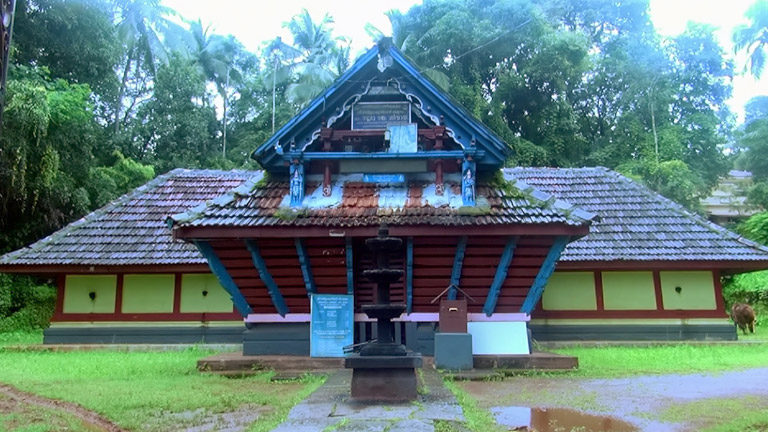
All the other eleven children the couple left behind in the forest were adopted by various couples who found them and they all lived in different places.
Here are all the twelve names of the children:
- Melathol Agnihotri: The Brahmin, Agnihotri, of Melathol illam
- Rajakan: The washerman
- Uliyannoor Thachchan [Perunthachchan]: The carpenter from Uliyanoor
- Vallon: The folk singer (from the clan of folk singer)
- Vaayillaakkunnilappan: The man born without a mouth
- Vaduthala Nair: From the caste of Nair
- Kaarackal Amma: The mother from Kaarackal
- Uppukoottan: Possibly from the Mappila clan, i.e., a Christian or a Muslim
- Paananaar: From the clan of musicians
- Naaraanaththu Braanthan: The lunatic from Naaraanaththu
- Akavoor Chaaththan: The low-caste Chaaththan
- Paakkanaar: The low-caste weaver
Once they grew up, the siblings somehow came to know each other and developed familial bonds. Vararuchi and his wife continued their pilgrimages and attained salvation. All the children, except Vaayillaakkunnilappan, came together to perform the last rites for her mother and father.
✴︎ ✴︎ ✴︎ ✴︎ ✴︎
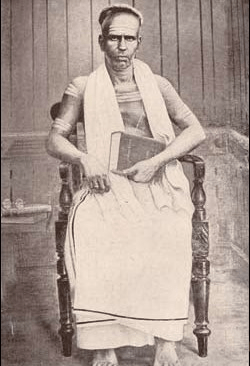
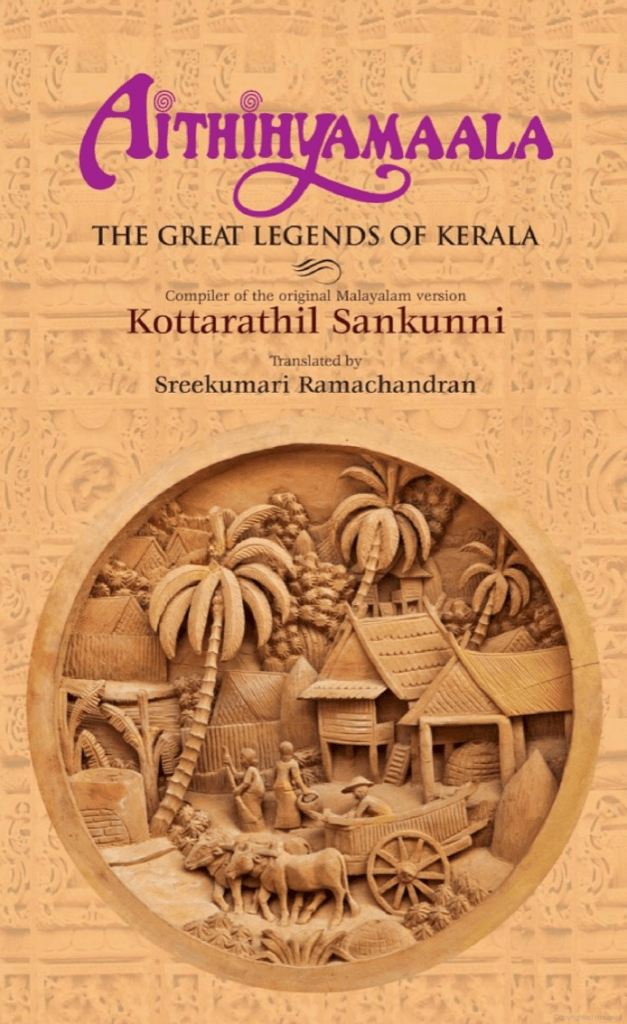
The twelve children born to Vararuchi and his pariah wife were famously known as Parayi Pettu Panthirukulam and many clans in Kerala trace their origins to these twelve children. In Kerala, there are also many folktales about these twelve children. Some of the famous tales are compiled in Malayalam by Kottarathil Sankunni (translated into English by Sreekumari Ramachandran) in Atthihyamaala: The Great Legends of Kerela.
This folktale beautifully imagines the diverse society of Kerala and the strong social bond between its people for centuries.
 rishvanth.com
Leave a comment