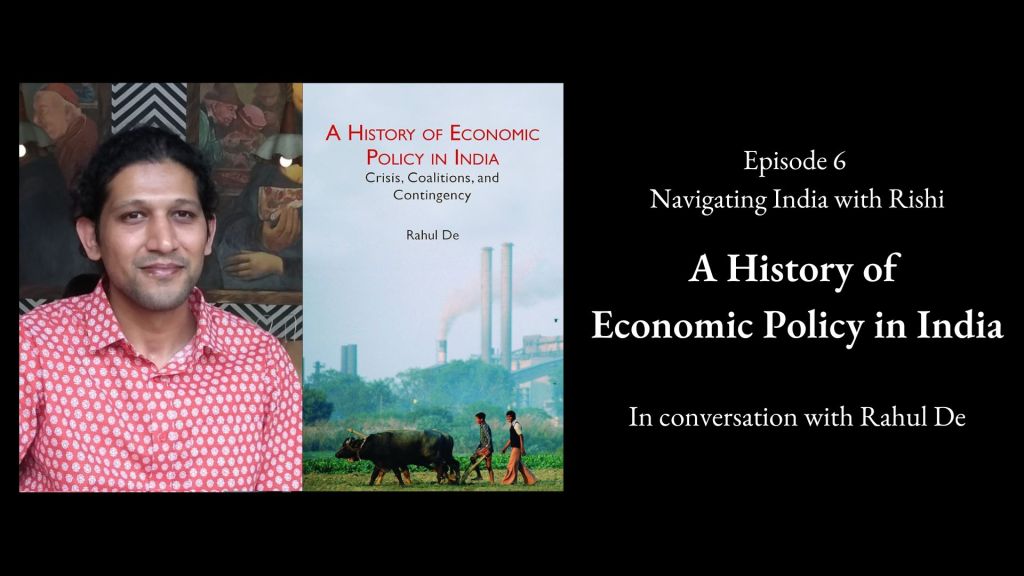
In this episode, I am in conversation with Rahul De, to discuss the key ideas in his book ‘A History of Economic Policy in India: Crisis, Coalitions and Contingency’. Rahul takes us through the meaning of economic history and the need for studying it. He situates industrial development in colonial India and its integration with the global economy. Rahul meticulously and candidly explores the failure of the Indian variant of planning, the reality of the green revolution and changes in voting behaviour, the evolution of liberalisation, and defining what can make a coalition government successful. Don’s miss this episode.
References:
Rahul De: A History of Economic Policy in India: A History of Crisis, Contestation and Consensus.
Empire: How Colonial India Made Modern Britain by Aditya Mukherjee
Planning Democracy: Modern India’s Quest for Development by Nikhil Menon
India’s Political Economy 1947-2004: The Gradual Revolution by Francine R. Frankel
Technological Change and Political Turnover: The Democratizing Effects of the Green Revolution in India by Aditya Dasgupta
The Basic Approach by Jawaharlal Nehru
India’s Political Economy 1947-2004 by Francine R. Frankel
Industry and Empire: The Birth of the Industrial Revolution by Eric Hobsbawm
The Bombay Plan: Blueprint for Economic Resurgence (Edited by Sanjay Baru and Meghnad Desai)
Tirthankar Roy Website
Links to listen to the podcast:
Spotify: https://open.spotify.com/episode/7L8Vvp9xcPWf8jsWEB5ziL?si=8911c6e47ecc4a64
Apple Podcasts: https://podcasts.apple.com/in/podcast/navigating-india/id1701246699?i=1000664405424
Youtube: https://youtu.be/pnxqjWXiwcA?si=Fyr_9uCGyBb02sjU
Youtube Music: https://music.youtube.com/watch?v=pnxqjWXiwcA&si=8ezb_plwis8zNwtn
Website: https://reddyrishvanth.wordpress.com/navigating-india/
 rishvanth.com
Leave a comment