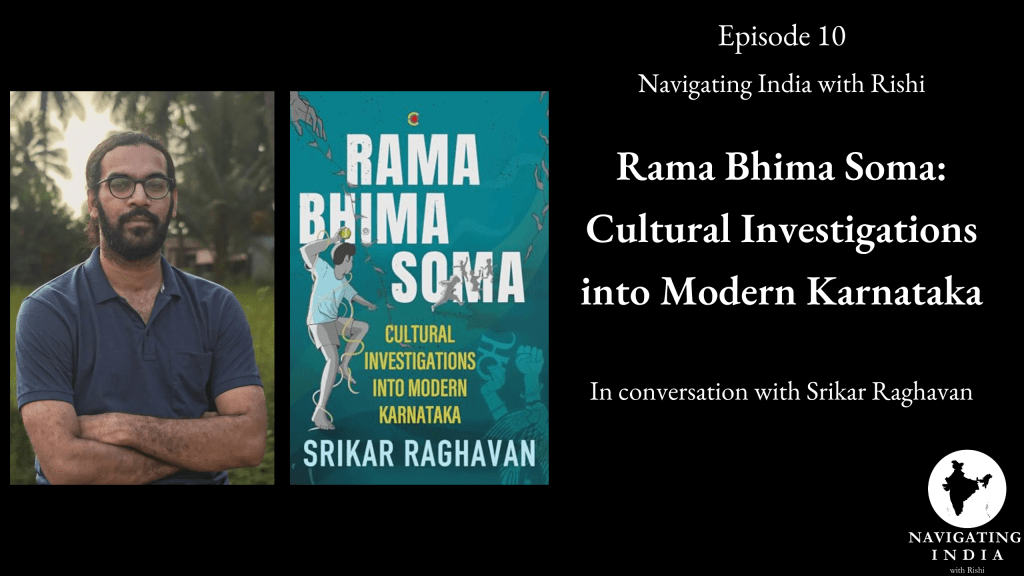
In this episode, I am in conversation with Srikar Raghavan about his book, ‘Rama Bhima Soma: Cultural Investigations into Modern Karnataka’. With rigorous research and profound sensitivity, this work examines the trajectories of Karnataka’s Literary, Trade Union, Naxal, Dalit, Socialist and Environmental movements. It also delves into the genesis and contradictions of all the major ideologies that have operated within the state and highlights the contributions of several individual figures, including Saketh Rajan, Syed Issaq, Shankar Mokashi Punekar, Shantaveri Gopala Gowda, Dr. Rajkumar, Pratibha Nandakumar, M.K. Indira, U.R. Ananthamurthy, S.L. Byrappa, and Ram Manohar Lohia. This episode and the book itself offer a scholarly exploration of the ideas, events, biographies, and movements that have significantly shaped the cultural and social fabric of Karnataka.
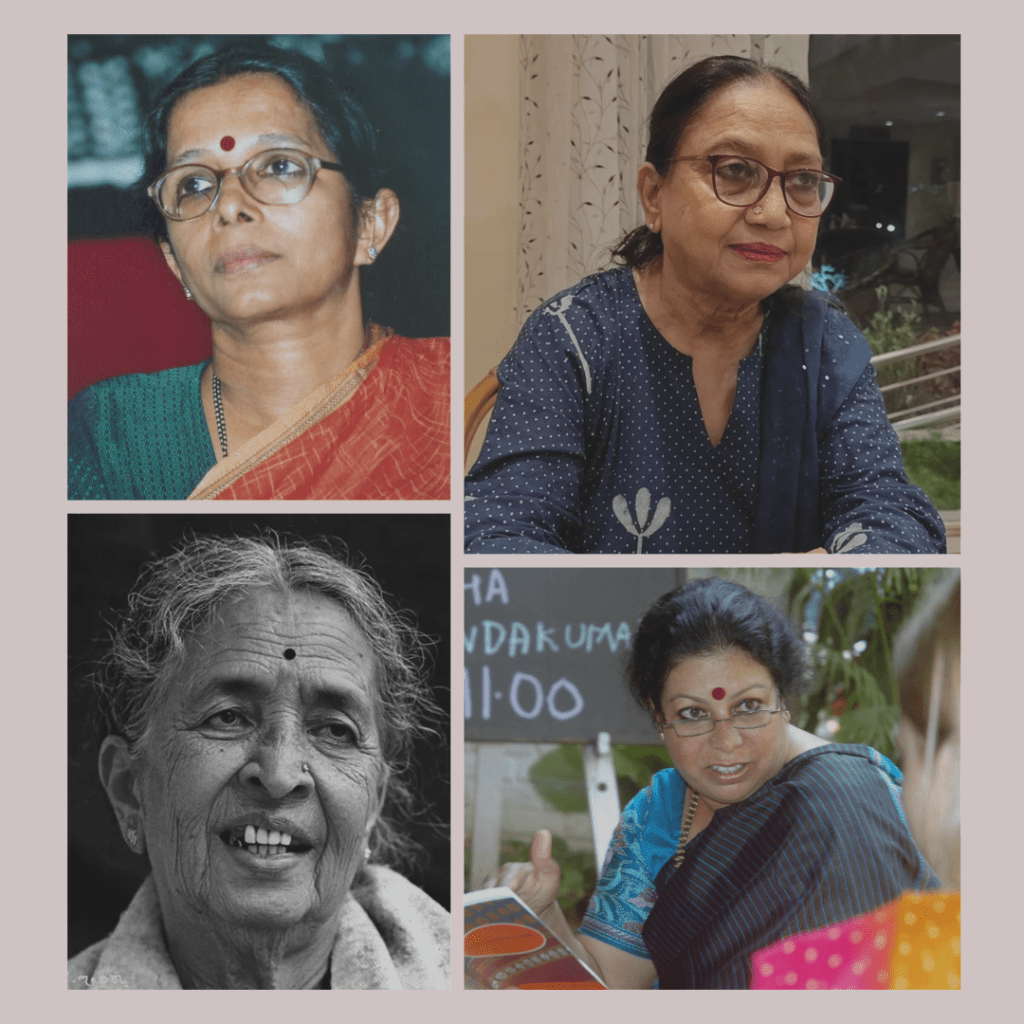
One of the many things we discussed was about the women in Kannada literature. According to Srikar Raghvan, after the 12th century Akkamahadevi, women are conspicuously absent in the Kannada literary scene until the 17th century. Even when women started writing in the 20th Century, they had to face unique challenges.
- Pratibha Nandakumar published her first collection of poems in 1979 and became an overnight star. A Kannada poet said at a stage function that she got published easily because ‘she is a brahmin’. To this, she responded:
“Can one drop one’s brahmin-hood as easily as one’s bra?
When I stood at the door, all ready to embark on my journey
All they saw were the seven generations behind my back”.
- M.K. Indira wrote her first novel titled ‘Tungabhadhra’ in 1950s and sent it to a publishing house in Dharwad. A Kannada critic, Kirtinath Kurtokoti, who received her manuscript, lost it in a train. For two years, they debated if they should tell Indira or write the novel in their own style and then tell her they published it. Fianlly, they wrote a letter to M.K. Indira saying, they had lost the manuscript. She rewrites the novel and sends it over, and then it’s published and becomes very popular. She became pioneer of a genre known as the ‘social novel’.
- Vaidehi wrote a novel titled ‘Aspryushyaru’ (Untouchables) in the early 1980s, exploring how untouchability affects relations between various communities and within the walls of a single household. When she met and asked Kota Shivarama Karanth about his thoughts on women’s literature, he said he hadn’t read much of it because, “Whenever something interests me very organically in the course of my studies, I read it. I have just not happened to come to this yet”. [callousness?]
- 8 Kannada writers received the Jnanpith Award, the highest literary award in India, presented every year (the second highest recipients by language, after Hindi (12)). All men. But I was extremely delighted Banu Mushtaq was shortlisted for the International Booker Prize, 2025, being first person from Kannada to get that honour. Hoping she wins the prize on 20th May.
Listen to the podcast to know more about Karnataka and the people who made it.
References:
- Srikar Raghavan: About, Twitter, Instagram
- Rama Bhima Soma: Cultural Investigations into Modern Karnataka by Srikar Raghavan
- Rama Bhima Soma Website
- Essays by Srikar Raghavan: The Adversary (On Saketh Rajan and Naxalism in Karnataka), Running after the light: Mudnakudu Chinnaswamy’s writing searches for a new moral order
- Heart Lamp: Selected Stories by Banu Mushtaq, translated by Deepa Bhasthi
- Chomana Dudi by Kota Shivarama Karanth
- Provincials: Postcards from the Peripheries by Sumana Roy (Review by Srikar Raghavan)
- Bringing Ambedkar and Gandhi together by Ramachandra Guha
- The Flaming Feet and Other Essays: The Dalit Movement in India by D.R. Nagaraj
- The Life and Times of George Fernandes by Rahul Ramagundam (Spotify, Apple Podcasts)
- Chomana Dudi, Moga Padeda Mana by Kota Shivarama Karanth
- Remembering U R Ananthamurthy by Chandan Gowda
- U R Ananthamurthy: Samskara: A Rite for a Dead Man (Translated from Kannada to English by A K Ramanujan), Bharathipura (Translated from Kannada to English by Susgeela Punitha), Avasthe (Translated from Kannada to English by Narayan Hegde)
- Vamshavriksha, Daatu by S L Byrappa
- Varadambika Parinaya Campu of Tirumalamba (Translated from Sanskrit to English by Sujatha Reddy)
- Songs for Siva: Vacanas of Akka Mahadevi (Translated by Vinaya Chaitanya)
- Tungabhadhra by M K Indira
- A Part Apart: The Life and Thought of B.R. Ambedkar by Ashok Gopal
- Staging a folk epic by Sweekruthi K (On Daklakatha Devikavya, a play adapted from works of K.B. Siddaiah)
- Making History: Karnataka’s People and their Past- Volume I (Stone Age to Mercantilism), II (Colonial Shock, Armed Struggle) by Saki (alias Saketh Rajan)
- Naanembudu Kinchittu (Autobiography) by Dr. Mogalli Ganesh
- How the Brahmins Won: From Alexander to the Guptas by Johannes Bronkhorst
- Who was Shivaji by Govind Pansara
- Library with 11,000 books burnt down in Mysuru, librarian vows to rebuild it by Sanjana Deshpande
- Syed Issaq- Mysuru’s ‘library man’ rebuilds his dream, on his own labour by Karthik KK
- Sri Ramayana Darshanam by Kuvempu (Translated from Kannada to English by S M Punekar)
The Episode is available on
Spotify, Apple Podcasts, YouTube, YouTube Music, Amazon Music, Website

 rishvanth.com
Leave a comment